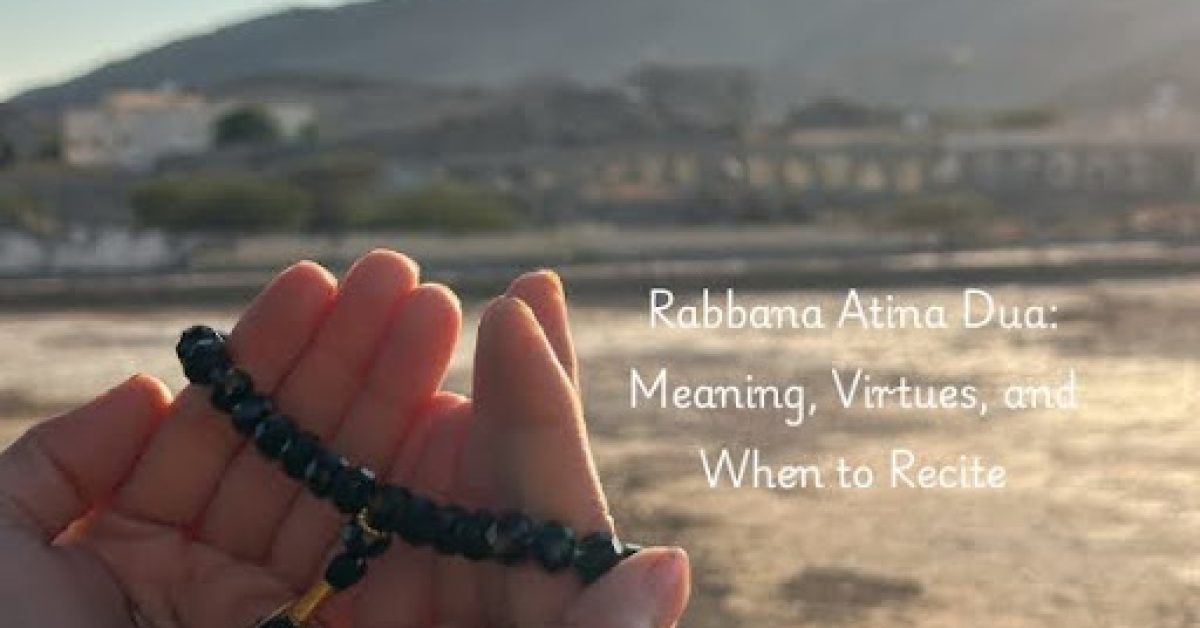
Some duas feel like they were made exactly for the moments when we feel lost, hopeful, grateful, or simply in need of Allah’s closeness. Among them, “Rabbana Atina Fid Dunya Hasanah wa Fil Aakhirati Hasanah wa Qina Adhabannar” stands out.
It is short, easy to remember, and beautifully complete. It captures everything we want in life and everything we hope for after it.
This guide explains the dua’s meaning, its deeper lessons, and why Muslims across generations have kept it close to their hearts.
Rabbana Atina Dua in Arabic
رَبَّنَا آتِنَا فِي الدُّنْيَا حَسَنَةً وَفِي الآخِرَةِ حَسَنَةً وَقِنَا عَذَابَ النَّارِ
English Translation
“Our Lord, grant us good in this world and good in the Hereafter, and protect us from the punishment of the Fire.”
What This Dua Really Means
This is not just a dua for daily recitation; it’s a complete way of thinking. Instead of focusing only on worldly goals or only on the Hereafter, it teaches balance.
1. Asking for Goodness in This World
When we say “good in this world,” we are asking Allah for everything wholesome and beneficial.
This includes good health, a peaceful home, halal earnings, emotional stability, sincere friendships, blessings in time, and a life that feels meaningful.
2. Asking for Goodness in the Hereafter
This is the true success. It includes Allah’s mercy, light on the Day of Judgment, safety during accountability, and entry into Paradise.
3. Asking for Protection
The final part reminds us that real loss is not losing wealth or opportunities—but losing the Hereafter. Protection from the punishment of the Fire is the greatest gift.
Why This Dua Is So Special
Many scholars say this is one of the most comprehensive duas in the entire Qur’an. It covers every stage of a believer’s life.
It brings balance
Islam encourages a healthy relationship with the world: not too attached, not too careless. This dua represents that balance.
It was recited by the Prophet Muhammad (ﷺ)
Especially during Hajj and Umrah. That shows its importance and its suitability for all occasions.
It brings clarity and peace
People often turn to this dua when they feel overwhelmed. The words themselves provide calmness, reminding us that both life and the next life are in Allah’s hands.
If you want to explore the virtues of this dua more deeply, here is a helpful, well-researched explanation:
Benefits of Rabbana Atina Fid Dunya Hasanah
When to Recite This Dua
There is no restriction. You can recite it anytime.
However, some moments are especially meaningful:
- During sujood
- After every obligatory prayer
- While making general supplications
- During Tawaf in Hajj or Umrah
- Before beginning a new journey or major life decision
- In moments of difficulty or confusion
Many people naturally adopt this dua as part of their daily routine because it feels complete and comforting.
A Reflection Many People Miss
This dua begins with “Rabbana” — Our Lord.
The word itself carries a feeling of closeness. Allah is not distant. He is the One who nurtures, protects, guides, and sustains. By beginning a dua with “Rabbana,” we are already expressing trust before even asking for anything.
This is also why many wonderful duas in the Qur’an begin with “Rabbana.” One of them is:
Rabbana Atina Min Ladunka Rahmah — a supplication asking Allah for mercy directly from Him.
You can read a simple, clear explanation about it here:
Rabbana Atina Min Ladunka Dua Meaning and Benefits
Final Thoughts
Rabbana Atina is the kind of dua that grows with you. It feels relevant during childhood, adulthood, old age, and every phase in between. Its meaning is deep, but its words are gentle and easy to carry in your heart.
If a person only memorized a handful of duas in life, this one should certainly be among them. It has the power to shape your dunya, strengthen your akhirah, and keep your heart connected to the One who never leaves you.