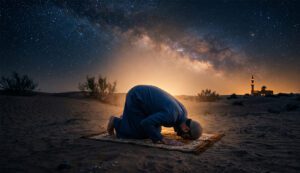

_Jannah and Jahannam

Understanding Jannah and Jahannam in Islam | Heaven & Hell

I still remember the nights spent with my grandmother, her voice soft but firm as she described the awe-inspiring realms of Jannah (Heaven) and Jahannam (Hell). Her words painted a vivid tapestry of eternal gardens, rivers of milk, and unimaginable peace on one hand, and blazing fire and torment on the other.

Those evenings left an imprint on my heart, sparking curiosity and reverence. What does Islam truly teach us about these realms? Why are they central to our faith?

In Islam, Jannah and Jahannam are not just concepts; they are pivotal to understanding our purpose and accountability in this life. This article dives into the essence of these realms, their descriptions, and their profound significance.

The Concept of Life After Death in Islam

Islam emphasizes that this worldly life is temporary—a test to determine our eternal fate. The Day of Judgment (Yawm al-Qiyamah) will mark the culmination of our deeds, deciding our place in the hereafter. Allah (SWT) describes this in the Quran:

“And We have made every man’s actions cling to his neck, and on the Day of Resurrection, We will bring forth a book which he will find wide open.” (Quran 17:13)

Key aspects include:

  • Accountability: Every deed, from the smallest act of kindness to the gravest sin, is recorded. The scales of justice will weigh them to determine our destiny.
  • The Bridge of Sirat: All souls will cross this narrow bridge suspended over Jahannam. Only the righteous will safely reach Jannah, while the sinful may falter.

This belief instills a sense of moral responsibility, urging us to lead lives aligned with faith and virtue.

Jannah – The Ultimate Reward

What Is Jannah Like?
Jannah, often translated as Paradise, is described as a place of eternal peace and unimaginable beauty. The Quran vividly depicts it as:

“Gardens of perpetual bliss: they shall enter there, as well as the righteous among their fathers, their spouses, and their offspring.” (Quran 13:23)

Imagine a realm where:

  • Rivers of milk, honey, and pure water flow beneath lush gardens.
  • Every desire is granted instantly, without effort or exhaustion.
  • Fruits sweeter than any earthly delicacy are within reach.
  • Palaces of gold, silver, and pearls await the believers.

 Eternal Companionship
In Jannah, believers will be reunited with their loved ones, provided they were righteous. This reinforces the importance of guiding one another toward goodness in this life.

 The Greatest Reward

While the physical and material pleasures of Jannah are beyond imagination, the ultimate joy lies in beholding Allah (SWT). The Quran alludes to this supreme reward:

“Faces on that Day will be radiant, looking at their Lord.” (Quran 75:22-23)

This moment transcends all earthly comprehension and is considered the pinnacle of eternal bliss.

Jahannam – The Ultimate Punishment

 The Description of Jahannam
Jahannam, or Hell, is a place of unimaginable torment, reserved for those who rejected faith and committed grievous sins. The Quran warns:

“Fear the Fire, whose fuel is men and stones, prepared for the disbelievers.” (Quran 2:24)

Descriptions of Jahannam include:

  • Blazing Fire: A consuming flame that burns beyond human understanding.
  • Boiling Water: The inhabitants will be forced to drink scalding liquids that offer no relief.
  • Unending Regret: The sinners will cry for a second chance, but their pleas will go unanswered.

Levels of Jahannam
Jahannam is said to have seven levels, each corresponding to the severity of sins. These levels are designed to deliver punishment that matches the gravity of one’s actions. The Quran mentions:

“Indeed, Jahannam is the promised place for them all. It has seven gates; for every gate is of them a portion designated.” (Quran 15:43-44)

Mercy Even in Punishment
Even in Jahannam, Allah’s mercy is not absent. For many, it serves as a form of purification. After enduring punishment, some souls may eventually be admitted into Jannah, reflecting the boundless compassion of Allah (SWT).

How to Attain Jannah and Avoid Jahannam

Striving for Jannah
Achieving entry into Jannah requires dedication to faith and good deeds. Key steps include:

  • Faith and Worship: Belief in Allah and regular acts of worship, such as prayer, fasting, and recitation of the Quran.
  • Charity and Kindness: Helping the needy and being a source of positivity.
  • Repentance: Sincerely seeking forgiveness for sins and striving to improve.

Avoiding Jahannam
The path to avoid Jahannam lies in:

  • Avoiding Major Sins: Shirk (associating partners with Allah), theft, and dishonesty.
  • Following the Straight Path: Adhering to the teachings of the Quran and Sunnah.
  • Repentance and Forgiveness: Never despair of Allah’s mercy, for He forgives all who turn to Him sincerely.

Common Misconceptions About Jannah and Jahannam

Misconception 1: Worship Is Driven Solely by Fear
While fear of Jahannam serves as a deterrent, the desire for Jannah and love for Allah (SWT) are equally powerful motivators.

Misconception 2: Hell Is Eternal for Everyone
Islam teaches that Jahannam is not eternal for all sinners. Allah’s mercy can lead to eventual forgiveness and redemption.

Conclusion
The concepts of Jannah and Jahannam are profound reminders of our purpose in life. They inspire us to reflect, repent, and strive for righteousness. As my grandmother often said, “This world is a bridge; cross it, but don’t build on it.”

May we live in a way that earns us entry into Jannah and protects us from the trials of Jahannam. Ameen.


In a world where people often carry the heavy burden of guilt, regret, and past mistakes, one of the most powerful truths in Islam stands clear:

No sin is greater than the mercy of Allah.

Yet, many people whisper to themselves:

“Allah will never forgive me…”

This thought may feel like humility, but in reality, it is one of the most dangerous traps. It is a quiet deception—one that pushes a believer away from hope, from repentance, and ultimately from Allah.

This article is a deep, spiritual reminder that Allah’s mercy is infinite, your return is always welcome, and the door of tawbah (repentance) is never closed—until your last breath.


Understanding Allah’s Mercy in Islam

Islam is a religion built on mercy, compassion, and forgiveness. Every chapter of the Qur’an (except one) begins with:

“Bismillah ir-Rahman ir-Raheem”
(In the name of Allah, the Most Merciful, the Especially Merciful)

These names—Ar-Rahman and Ar-Raheem—highlight that Allah’s mercy is not limited, conditional, or selective. It is vast, overwhelming, and always accessible.

The Dangerous Lie: “Allah Will Never Forgive Me”

Many believers fall into a silent despair. They think:

  • “My sins are too many”
  • “I’ve gone too far”
  • “There is no way back”

But this mindset is not from faith—it is from Shaytan.

Shaytan’s goal is not just to make you sin. His ultimate goal is to make you lose hope in Allah’s mercy.

Because the moment you lose hope, you stop trying.


Powerful Real-Life Examples from Authentic Hadith

Islam doesn’t just tell us about forgiveness—it shows us through real stories that shake the heart.

1. The Man Who Killed 100 People

A man committed one of the worst crimes imaginable—he killed 100 people. Yet, when he sincerely repented and sought a way back to Allah, he was forgiven.

This hadith teaches us:

  • No matter how extreme the sin is
  • Sincere repentance wipes it away

2. The Prostitute Who Gave Water to a Dog

A woman living a sinful life saw a thirsty dog dying of thirst. She showed mercy, gave it water—and Allah forgave her completely.

This shows:

  • Even a small act of kindness can lead to massive forgiveness
  • Allah values sincerity over perfection

3. The Woman Who Repented from Zina

A woman committed a major sin but later repented with such sincerity that the Prophet ﷺ said her repentance was so عظیم (great) that it could be enough for many others.

Lesson:

  • Deep regret + sincerity = powerful tawbah

4. Removing Harm from the Road

A man removed something harmful from the path, and Allah appreciated it so much that He forgave him.

Lesson:

  • Never underestimate small good deeds

The Ultimate Quranic Promise of Forgiveness

One of the most powerful verses in the Qur’an says:

“Do not despair of the mercy of Allah. Indeed, Allah forgives all sins.”
(Surah Az-Zumar 39:53)

This verse is not limited. It does not say some sins. It says:

👉 All sins

This includes:

  • Major sins
  • Repeated sins
  • Hidden sins
  • Public sins

As long as you turn back sincerely.


What Is Tawbah (Repentance) in Islam?

Tawbah is not just saying “Astaghfirullah.” It is a complete return to Allah.

Steps of True Tawbah:

  1. Stop the sin immediately
  2. Feel genuine regret
  3. Ask Allah for forgiveness sincerely
  4. Make a firm intention not to return
  5. If rights of others are involved → make it right

Why People Delay Tawbah (And Why You Shouldn’t)

Many people think:

  • “I’ll repent later”
  • “Let me enjoy life first”
  • “I’ll change when I’m older”

But the truth is:

👉 Later is not guaranteed

Every breath is a chance. Every moment is an opportunity.


Signs That Allah Wants You Back

If you’re reading this, it’s not random.

These are signs that Allah is calling you:

  • You feel guilt after sinning
  • You think about changing
  • You search for Islamic reminders
  • You feel emotional after hearing Qur’an

These are not weaknesses.

👉 These are signs of imaan (faith) still alive in your heart.


The Beauty of Starting Again

One of the most beautiful things in Islam:

👉 You can start over anytime

No matter:

  • How many times you failed
  • How many times you sinned
  • How far you drifted

Allah does not get tired of forgiving.

But we get tired of asking.


How to Strengthen Your Connection with Allah

To stay consistent in your journey:

1. Read the Qur’an Daily

Even if it’s just a few verses.

2. Make Istighfar Regularly

Say: Astaghfirullah with your heart.

3. Surround Yourself with Good Influence

Stay close to reminders, not distractions.

4. Learn Islam Properly

Understanding increases faith.


Your Journey Starts Here

If you’re truly ready to return to Allah…

If you want to understand the Qur’an…

If you want guidance, peace, and purpose…

Then take your next step today.


🌐 Start Your Spiritual Journey Now

At Al Muslim Quran, you can:

  • Learn to read Qur’an correctly
  • Understand meanings deeply
  • Strengthen your connection with Allah
  • Build a consistent Islamic lifestyle

👉 Visit now: https://almuslimquran.com/


Final Reflection

Pause for a moment and reflect:

  • You are not too sinful
  • You are not too far gone
  • You are not beyond mercy

As long as your heart beats…

👉 The door of tawbah is open.


Take Action Today

Don’t wait.

Right now:

  • Say Astaghfirullah sincerely
  • Make intention to change
  • Take one step towards Allah

Because when you take one step…

👉 Allah comes towards you with mercy beyond imagination.

Sharing Is Caring

Start Learning Quran Online with Qualified Teachers

Book your FREE trial class today.

Flexible timings for kids and adults.
 

Please Fill Out The Form

[metform form_id="406"]