Gratitude

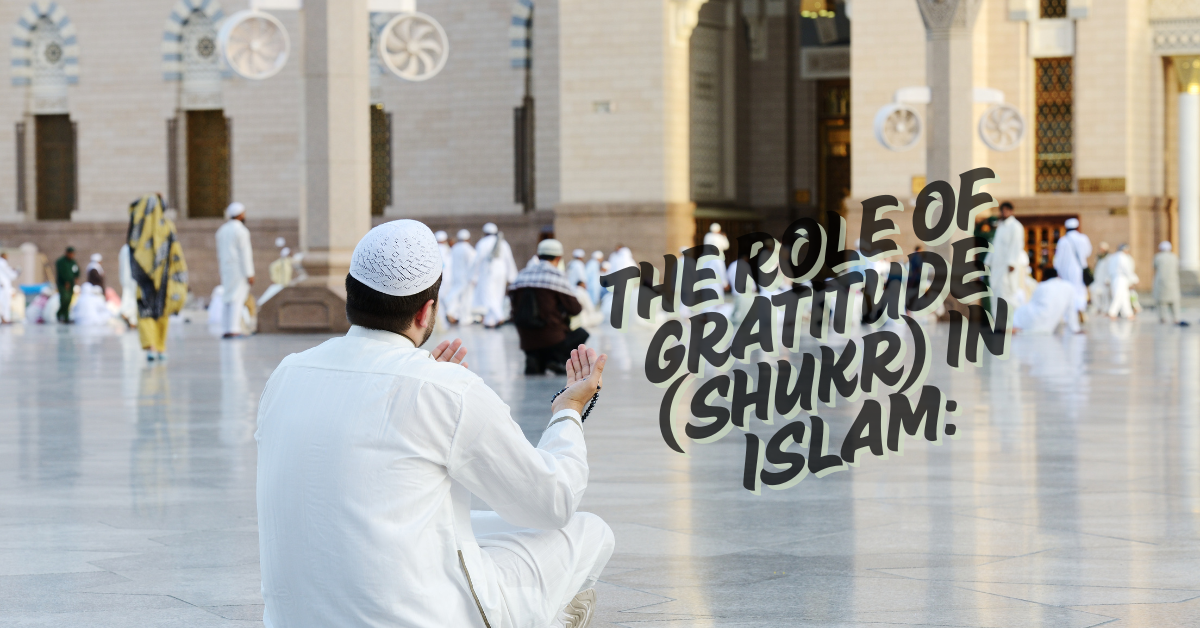
The Role of Gratitude (Shukr) in Islam:

In a world of challenges and distractions, we forget our blessings. Islam teaches us that gratitude, or Shukr, is a practice. It transforms us. It deepens our connection with Allah (SWT) and brings peace to our hearts.

But what does it truly mean to be grateful in Islam? How can we cultivate gratitude in our daily lives? And what rewards await those who practice Shukr? Let’s explore the power of gratitude through the lens of the Quran and Sunnah.

1. What is  Gratitude (Shukr) in Islam?

Shukr is more than just saying “thank you.” It is a mindset of recognizing and appreciating Allah’s blessings, big and small. The Quran captures this concept beautifully: “And [remember] when your Lord proclaimed, ‘If you are grateful, I will surely increase you [in favor].'” (Quran 14:7)

This verse reminds us that gratitude is not just a moral duty—it’s a means of attracting more blessings from Allah.

2. The Three Dimensions of Shukr Gratitude

Islamic teachings highlight three key dimensions of gratitude:

  1. Gratitude of the Heart (Shukr bil-Qalb): Feeling genuine appreciation for Allah’s blessings. It means reflecting on His favors. Every good thing comes from Him.

  2. Gratitude of the Tongue (Shukr bil-Lisan): It means to thank through words, like saying Alhamdulillah (All praise is due to Allah). The Prophet Muhammad (ﷺ) said: “Whoever does not thank people has not thanked Allah.” (Sunan Abi Dawud)

  3. Gratitude of Actions (Shukr bil-Amal): Use Allah’s blessings to please Him. This means helping others, doing good deeds, and staying away from sins.

3. Lessons from the Qur’an and Sunnah

The Quran and Sunnah provide us with examples of gratitude that inspire and guide us.

  • Prophet Sulaiman (AS) received great wealth and power. He stayed humble and grateful. He said: “This is from the favor of my Lord to test me, to be grateful or ungrateful.” And whoever is grateful—his gratitude is only for [the benefit of] himself. And whoever is ungrateful—then indeed, my Lord is free of need and generous.” (Quran 27:40)

  • The Story of Prophet Ayub (AS): He lost his health, wealth, and family. But he remained patient and grateful. He said, “Indeed, adversity has touched me, and You are the Most Merciful of the merciful.” (Quran 21:83)

  • The Prophet Muhammad (ﷺ): He would often wake up at night to pray and thank Allah, saying: “O Allah, I thank You for the blessings You have bestowed upon me.”

4. Practical Ways to Cultivate Shukr

Gratitude is a habit that can be developed with intention and effort. Here are some practical tips:

  1. Start and End Your Day with Gratitude: Begin your day by saying Alhamdulillah. At day’s end, reflect on three things you’re grateful for.

  2. Keep a Gratitude Journal: Write down at least one blessing every day. Over time, you are going to realize how much Allah has given you.

  3. Thank your family, friends, and strangers for their kindness. The Prophet (ﷺ) said: “He who does not thank people does not thank Allah.” (Sunan Abi Dawood)

  4. Use your blessings for good: share your wealth, time, and skills with others. This is the highest form of gratitude.

5. The Rewards of Shukr

The rewards of gratitude are both immediate and eternal.

  • Inner Peace: Gratitude shifts your focus from what you lack to what you have. It brings contentment to your heart.

  • Allah’s Pleasure: Allah says, “If you are grateful, I will surely increase you [in favor].” (Quran 14:7)

Conclusion

Gratitude is not just a feeling—it’s a way of life. Practicing Shukr aligns us with the Quran and Sunnah. It brings us closer to Allah’s mercy and guidance.

Let us embody gratitude in all we do. Every blessing, big or small, is a gift from Allah. As the Quran reminds us: “So remember Me; I will remember you. And be grateful to Me and do not deny Me.” (Quran 2:152)


In a world where people often carry the heavy burden of guilt, regret, and past mistakes, one of the most powerful truths in Islam stands clear:

No sin is greater than the mercy of Allah.

Yet, many people whisper to themselves:

“Allah will never forgive me…”

This thought may feel like humility, but in reality, it is one of the most dangerous traps. It is a quiet deception—one that pushes a believer away from hope, from repentance, and ultimately from Allah.

This article is a deep, spiritual reminder that Allah’s mercy is infinite, your return is always welcome, and the door of tawbah (repentance) is never closed—until your last breath.


Understanding Allah’s Mercy in Islam

Islam is a religion built on mercy, compassion, and forgiveness. Every chapter of the Qur’an (except one) begins with:

“Bismillah ir-Rahman ir-Raheem”
(In the name of Allah, the Most Merciful, the Especially Merciful)

These names—Ar-Rahman and Ar-Raheem—highlight that Allah’s mercy is not limited, conditional, or selective. It is vast, overwhelming, and always accessible.

The Dangerous Lie: “Allah Will Never Forgive Me”

Many believers fall into a silent despair. They think:

  • “My sins are too many”
  • “I’ve gone too far”
  • “There is no way back”

But this mindset is not from faith—it is from Shaytan.

Shaytan’s goal is not just to make you sin. His ultimate goal is to make you lose hope in Allah’s mercy.

Because the moment you lose hope, you stop trying.


Powerful Real-Life Examples from Authentic Hadith

Islam doesn’t just tell us about forgiveness—it shows us through real stories that shake the heart.

1. The Man Who Killed 100 People

A man committed one of the worst crimes imaginable—he killed 100 people. Yet, when he sincerely repented and sought a way back to Allah, he was forgiven.

This hadith teaches us:

  • No matter how extreme the sin is
  • Sincere repentance wipes it away

2. The Prostitute Who Gave Water to a Dog

A woman living a sinful life saw a thirsty dog dying of thirst. She showed mercy, gave it water—and Allah forgave her completely.

This shows:

  • Even a small act of kindness can lead to massive forgiveness
  • Allah values sincerity over perfection

3. The Woman Who Repented from Zina

A woman committed a major sin but later repented with such sincerity that the Prophet ﷺ said her repentance was so عظیم (great) that it could be enough for many others.

Lesson:

  • Deep regret + sincerity = powerful tawbah

4. Removing Harm from the Road

A man removed something harmful from the path, and Allah appreciated it so much that He forgave him.

Lesson:

  • Never underestimate small good deeds

The Ultimate Quranic Promise of Forgiveness

One of the most powerful verses in the Qur’an says:

“Do not despair of the mercy of Allah. Indeed, Allah forgives all sins.”
(Surah Az-Zumar 39:53)

This verse is not limited. It does not say some sins. It says:

👉 All sins

This includes:

  • Major sins
  • Repeated sins
  • Hidden sins
  • Public sins

As long as you turn back sincerely.


What Is Tawbah (Repentance) in Islam?

Tawbah is not just saying “Astaghfirullah.” It is a complete return to Allah.

Steps of True Tawbah:

  1. Stop the sin immediately
  2. Feel genuine regret
  3. Ask Allah for forgiveness sincerely
  4. Make a firm intention not to return
  5. If rights of others are involved → make it right

Why People Delay Tawbah (And Why You Shouldn’t)

Many people think:

  • “I’ll repent later”
  • “Let me enjoy life first”
  • “I’ll change when I’m older”

But the truth is:

👉 Later is not guaranteed

Every breath is a chance. Every moment is an opportunity.


Signs That Allah Wants You Back

If you’re reading this, it’s not random.

These are signs that Allah is calling you:

  • You feel guilt after sinning
  • You think about changing
  • You search for Islamic reminders
  • You feel emotional after hearing Qur’an

These are not weaknesses.

👉 These are signs of imaan (faith) still alive in your heart.


The Beauty of Starting Again

One of the most beautiful things in Islam:

👉 You can start over anytime

No matter:

  • How many times you failed
  • How many times you sinned
  • How far you drifted

Allah does not get tired of forgiving.

But we get tired of asking.


How to Strengthen Your Connection with Allah

To stay consistent in your journey:

1. Read the Qur’an Daily

Even if it’s just a few verses.

2. Make Istighfar Regularly

Say: Astaghfirullah with your heart.

3. Surround Yourself with Good Influence

Stay close to reminders, not distractions.

4. Learn Islam Properly

Understanding increases faith.


Your Journey Starts Here

If you’re truly ready to return to Allah…

If you want to understand the Qur’an…

If you want guidance, peace, and purpose…

Then take your next step today.


🌐 Start Your Spiritual Journey Now

At Al Muslim Quran, you can:

  • Learn to read Qur’an correctly
  • Understand meanings deeply
  • Strengthen your connection with Allah
  • Build a consistent Islamic lifestyle

👉 Visit now: https://almuslimquran.com/


Final Reflection

Pause for a moment and reflect:

  • You are not too sinful
  • You are not too far gone
  • You are not beyond mercy

As long as your heart beats…

👉 The door of tawbah is open.


Take Action Today

Don’t wait.

Right now:

  • Say Astaghfirullah sincerely
  • Make intention to change
  • Take one step towards Allah

Because when you take one step…

👉 Allah comes towards you with mercy beyond imagination.

Sharing Is Caring

Start Learning Quran Online with Qualified Teachers

Book your FREE trial class today.

Flexible timings for kids and adults.
 

Please Fill Out The Form

[metform form_id="406"]