Throughout Islamic history, few rulers have left a legacy as profound as Sultan Muhammad al-Fatih رحمه الله, known in the West as Mehmed the Conqueror. He is remembered as the Muslim leader who fulfilled the glad tidings of Prophet Muhammad ﷺ by conquering Constantinople in 1453, transforming the city into one of the greatest centers of Islamic civilization.
Yet despite his military brilliance, political vision, and historic achievements, one story about Sultan Muhammad al-Fatih reveals a quality even greater than conquest: his humility before Allah and his immense respect for the people of knowledge.
This remarkable account teaches Muslims a timeless lesson about sincerity, the value of Islamic knowledge, and the elevated rank of scholars in Islam.
For believers seeking authentic Islamic knowledge, Quranic guidance, and inspiring stories from Islamic history, AlMuslimQuran.com serves as a trusted resource for learning about the Quran, Sunnah, Islamic scholars, and the lives of great Muslim leaders.
Who Was Sultan Muhammad al-Fatih?
Sultan Muhammad al-Fatih was one of the greatest rulers in Islamic history.
Born in 1432 CE, he became the ruler of the Ottoman Empire at a young age and dedicated his life to serving Islam.
He is most famous for conquering Constantinople, a city that had remained unconquered for centuries despite numerous attempts.
The conquest fulfilled the prophecy of Prophet Muhammad ﷺ:
“Verily, Constantinople shall be conquered. What a wonderful leader will her leader be, and what a wonderful army will that army be.”
This achievement secured Sultan Muhammad al-Fatih’s place among the most celebrated leaders of the Muslim Ummah.
However, what made him truly great was not merely military success.
It was his deep faith, humility, and devotion to Allah.
The Story of the Madrassah and the Mud of the Students
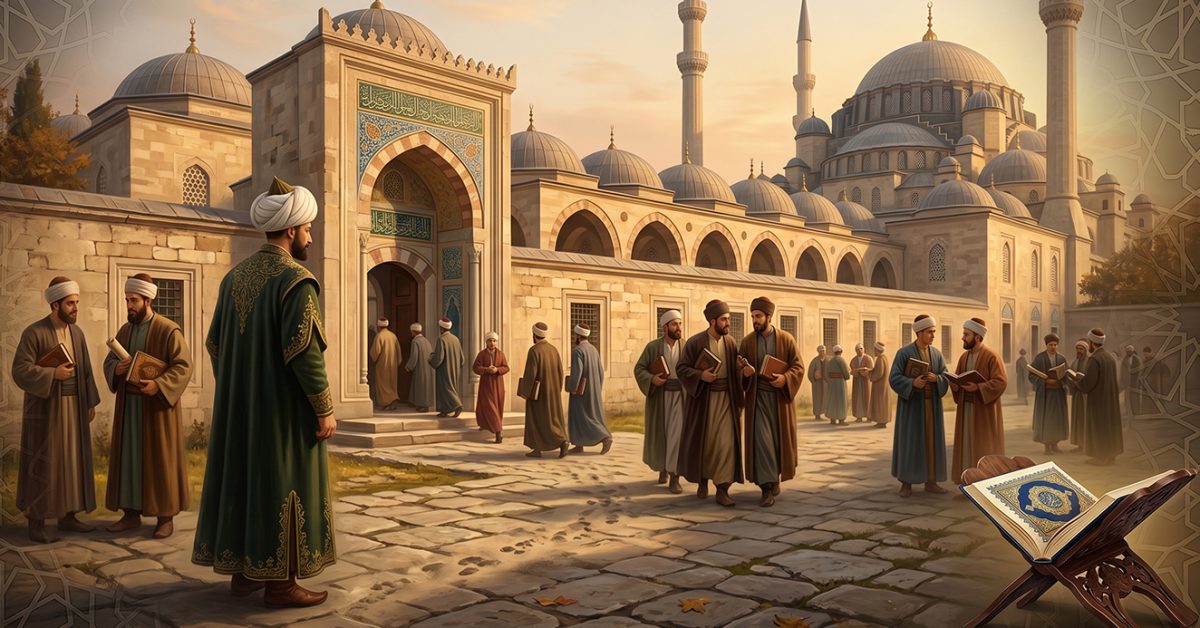
One of the most beautiful stories narrated about Sultan Muhammad al-Fatih concerns the establishment of a famous madrassah near Fatih Mosque in Istanbul.
When the madrassah was being built, the Sultan issued an unusual instruction.
He ordered workers to dig a deep pit at the entrance and cover it with an iron grill.
The officials, architects, and ministers were puzzled.
Why would such a pit be needed at the entrance of a place of learning?
Eventually, one of them gathered the courage to ask the Sultan.
The answer left everyone speechless.
The Sultan said:
“When I die and my body is placed in the grave, throw the mud collected in this pit over me.”
The officials were astonished.
They asked him why.
The Sultan replied with words that continue to inspire Muslims centuries later:
“For the sake of the mud that falls from the shoes of the seekers of knowledge and gathers in this pit, I hope Allah Almighty will forgive me and save me in the Hereafter.”
A Lesson in True Humility
Reflect upon this statement.
This was not an ordinary man.
This was the conqueror of Constantinople.
A ruler who commanded armies.
A leader whose name became famous throughout the world.
A man whose achievements changed the course of history.
Yet he did not place his hopes in:
- His military victories
- His kingdom
- His wealth
- His power
- His fame
Instead, he hoped for Allah’s mercy through the dust carried on the shoes of students seeking sacred knowledge.
This demonstrates one of the most important qualities of the righteous:
The truly great never see themselves as great.
The more a person knows Allah, the more humble they become.
Why Great Muslims Feared Their Deeds
One of the characteristics of righteous believers throughout Islamic history was their fear that their deeds might not be accepted.
Allah says in the Holy Quran:
“They are those who give what they give while their hearts are fearful because they will return to their Lord.”
The Companions, scholars, and righteous leaders constantly worried about acceptance.
They understood that salvation comes through Allah’s mercy rather than personal achievements.
This is why Sultan Muhammad al-Fatih searched for even the smallest deed that might earn Allah’s forgiveness.
His story reminds us that sincerity often matters more than visibility.
A hidden act performed purely for Allah can outweigh achievements celebrated by the entire world.
The Noble Status of Scholars in Islam
The Sultan’s respect for the dust of students was rooted in Islam’s extraordinary emphasis on knowledge.
Islam places scholars among the most honored members of society.
The Messenger of Allah ﷺ said:
“Indeed, the scholars are the heirs of the Prophets.”
The Prophets did not leave behind wealth, palaces, or worldly treasures.
Their legacy was knowledge.
Whoever inherits that knowledge inherits one of the greatest blessings in existence.
This hadith demonstrates the tremendous responsibility and honor carried by Islamic scholars.
Why Scholars Are Called the Heirs of the Prophets
Every Prophet came with a mission:
- Teaching truth
- Guiding humanity
- Explaining revelation
- Calling people to Allah
After the Prophets, scholars continue this mission.
They preserve:
- Quranic knowledge
- Prophetic teachings
- Islamic jurisprudence
- Correct belief
- Moral guidance
Without scholars, much of Islamic knowledge would be lost or misunderstood.
This is why generations of Muslims have shown immense respect toward those who dedicate their lives to learning and teaching Islam.
The Quran’s Emphasis on Knowledge
The importance of knowledge appears repeatedly throughout the Quran.
Allah asks:
“Are those who know equal to those who do not know?”
(Quran 39:9)
This rhetorical question highlights the unique status of people who possess beneficial knowledge.
Knowledge illuminates the path to Allah.
It helps believers distinguish truth from falsehood.
It protects people from ignorance and misguidance.
It strengthens faith and deepens worship.
For Muslims seeking to increase their understanding of Islam, regular engagement with Quran study resources through AlMuslimQuran.com can help develop a stronger connection with Allah’s guidance.
The Superiority of the Scholar
The Prophet ﷺ further explained the status of scholars when he said:
“The superiority of the scholar over the worshipper is like the superiority of the moon over the rest of the stars.”
This hadith does not diminish worship.
Rather, it highlights the broader impact of knowledge.
A worshipper primarily benefits himself through devotion.
A scholar benefits entire communities.
Through teaching, writing, advising, and guiding, scholars influence generations of believers.
Even after their death, their knowledge continues to benefit people.
The Connection Between Knowledge and Civilization
Throughout Islamic history, great civilizations emerged wherever knowledge was honored.
Cities such as:
- Madinah
- Baghdad
- Damascus
- Cairo
- Cordoba
- Istanbul
became centers of learning because Muslims valued scholars and educational institutions.
Libraries, universities, and madrassahs flourished because rulers understood that knowledge strengthens both faith and society.
Sultan Muhammad al-Fatih followed this tradition.
His investment in education reflected his understanding that lasting success comes through knowledge and guidance.
Seeking Sacred Knowledge in Islam
The pursuit of Islamic knowledge is among the greatest acts of worship.
The Prophet ﷺ said:
“Whoever travels a path seeking knowledge, Allah will make easy for him a path to Paradise.”
Seeking knowledge includes:
- Learning the Quran
- Studying Hadith
- Understanding Aqeedah
- Learning Fiqh
- Studying Tafsir
- Improving character
Every Muslim should dedicate time to increasing beneficial knowledge.
Today, access to Islamic education has become easier than ever through online resources such as AlMuslimQuran.com, where believers can study Quranic teachings, Islamic history, and authentic guidance from the Quran and Sunnah.
The Virtue of Students of Knowledge
Not only are scholars honored in Islam, but students seeking knowledge are also highly respected.
The angels lower their wings for seekers of knowledge out of pleasure with what they do.
Every step taken toward learning Islam becomes an act of worship.
The students entering the madrassah built by Sultan Muhammad al-Fatih may not have realized their importance.
Yet the Sultan himself recognized their value.
He viewed the dust from their shoes as something worthy of respect because it came from people pursuing sacred knowledge.
Lessons Muslims Can Learn Today
The story of Sultan Muhammad al-Fatih offers several powerful lessons.
1. Never Rely on Your Deeds Alone
No matter how many achievements we accumulate, we remain dependent upon Allah’s mercy.
2. Respect Scholars and Students of Knowledge
Islam elevates those who dedicate themselves to learning and teaching.
3. Seek Knowledge Consistently
Every Muslim should strive to increase beneficial knowledge throughout life.
4. Practice Humility
True greatness comes through humility, not self-promotion.
5. Support Islamic Education
Helping institutions, teachers, and students of knowledge can become a source of immense reward.
The Importance of Quranic Knowledge
At the center of all Islamic learning stands the Quran.
The Quran remains the primary source of guidance for humanity.
Studying the Quran helps believers:
- Strengthen faith
- Improve character
- Understand worship
- Develop wisdom
- Increase closeness to Allah
This is why Muslims throughout history have built institutions dedicated to preserving and teaching the Quran.
Platforms like AlMuslimQuran.com continue this mission by providing accessible resources for Quran reading online, Quran study, Islamic education, and spiritual development.
Building a Legacy Through Knowledge
Most worldly achievements eventually fade.
Buildings deteriorate.
Empires disappear.
Wealth is spent.
Positions end.
Knowledge, however, continues benefiting people long after a person dies.
The Prophet ﷺ taught that one of the deeds that continues after death is beneficial knowledge.
Every believer should ask:
- What knowledge am I learning?
- What knowledge am I sharing?
- How can I support the spread of Islamic education?
The answers to these questions may shape our legacy in this world and the next.
Conclusion
The story of Sultan Muhammad al-Fatih and the mud collected from the shoes of students is a powerful reminder of what true greatness looks like.
Despite conquering Constantinople and becoming one of the most celebrated rulers in history, he placed his hope not in power, wealth, or fame but in Allah’s mercy and the blessing associated with seekers of sacred knowledge.
His humility reflects the spirit of Islam.
His respect for scholars reflects the teachings of the Prophet ﷺ.
His story reminds us that knowledge remains among the greatest treasures a believer can pursue.
May Allah increase us in beneficial knowledge, allow us to honor the scholars and students of Islam, strengthen our connection with the Quran, and grant us humility like the righteous servants who came before us.
Ameen.