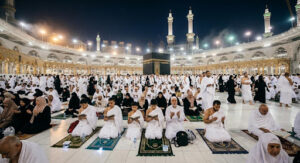
Hajj, the fifth pillar of Islam, is more than just a physical pilgrimage to Makkah. It is a deeply spiritual journey that transforms the soul, renews faith, and strengthens the bond between a believer and Allah. One of the most powerful and symbolic stories within Hajj is the story of Zamzam—a tale rooted in patience, hope, and divine mercy. It continues to inspire millions of Muslims as they seek meaning in the Hajj pilgrimage experience.

1. The Spiritual Journey of Hajj
For every pilgrim, Hajj is a life-changing spiritual journey of Hajj, where rituals are not just motions, but symbols of a believer’s connection with their Creator. The spiritual meaning of Hajj rituals becomes clear through acts like wearing the white garments of Ihram, which represent purity and equality, and standing on the plains of Arafah in total submission to Allah.
But one of the most profound rituals in Hajj is the Sa’i between Safa and Marwah—the re-enactment of Hajar’s struggle in search of water for her infant son, Ismail. It reminds us that true spirituality involves effort, struggle, and deep trust in Allah’s plan.

2. The Story of Hajar: Faith and Sacrifice
The story of Hajar in Hajj is a cornerstone of the pilgrimage. When Prophet Ibrahim (AS) left Hajar and baby Ismail alone in the barren valley of Makkah, it was a command from Allah. Hajar didn’t question or complain. Her response was simple yet profound: “If Allah has commanded it, then He will not abandon us.”
As her child cried of thirst and the desert offered no sign of water or life, Hajar ran desperately between the two hills—Safa and Marwah—seven times. This act of a mother’s love and unwavering belief became one of the essential rituals of Hajj. Her persistence wasn’t just a physical act—it was a supreme expression of faith and trust during Hajj, a lesson for every soul seeking Allah.
3. The Miracle of Zamzam
In her final moments of desperation, Allah responded to Hajar’s unwavering trust with a miracle. The angel Jibreel struck the ground near Ismail, and Zamzam water gushed forth from the earth. Overwhelmed with relief, Hajar exclaimed, “Zamzam, Zamzam!” trying to contain the miraculous spring.
This Zamzam water in Hajj is more than a sacred drink—it is a sign of Allah’s divine mercy in Hajj. Despite the passing of thousands of years and millions of pilgrims drawing from it daily, Zamzam has never dried. It stands as a symbol that Allah never abandons those who place their trust in Him.
4. Spiritual Lessons from Hajj Pilgrimage and Zamzam
The spiritual lessons from Hajj pilgrimage and the story of Zamzam are timeless. Here are a few reflections every Muslim can carry:
Trust in Allah always bears fruit: Hajar’s faith was not based on logic but on complete surrender. This is the foundation of true spirituality.
Struggle is part of the spiritual path: Hajar’s effort in the desert was exhausting, but it became a ritual of meaning. Every believer must understand that inner transformation often comes through trials.
Allah’s help comes in unimaginable ways: The miracle of Zamzam wasn’t just about water—it was a response to sincerity, prayer, and faith.
Every step in Hajj carries a lesson: Whether it is the Sa’i, standing in Arafah, or stoning the pillars, each ritual nurtures the soul and teaches humility, patience, and unity.
A single act of faith can benefit generations: Hajar’s legacy lives on in every pilgrim. Her sacrifice gave rise to Makkah, the Kaaba, and ultimately, the birth of the final Prophet (SAW).
5. Applying Hajj’s Spiritual Lessons in Daily Life
Not everyone gets the chance to perform Hajj, but the spiritual meaning of Hajj is not limited to the sacred land. Muslims around the world can draw from its lessons:
Embrace hardship with faith: Like Hajar, face challenges with courage and belief that Allah sees your struggle.
Make intention in every action: Hajj is built on sincere niyyah (intention). Apply this in prayer, work, and relationships.
Stay spiritually connected: Drink Zamzam water with intention, reflect on the stories of the prophets, and renew your purpose regularly.
Practice patience and perseverance: Life’s Sa’i—running between hope and fear—builds resilience and spiritual depth.
Conclusion
The spiritual story of Zamzam is more than a historical event—it is a living legacy of faith, struggle, and divine reward. As Muslims reflect on the Hajj pilgrimage experience, the lesson of Hajar and the miracle of Zamzam serve as powerful reminders that Allah honors sincerity and never lets effort go to waste.
Let the spiritual journey of Hajj guide your everyday life. Whether you’re walking between hills, kneeling in prayer, or simply enduring a hardship with patience—remember that your faith is seen, your struggle is sacred, and your Zamzam will come.
🕌 Want to Learn More Spiritual Stories Like Zamzam?
Join Al Muslim Quran Academy’s Translation & Tafseer Course to explore the Quran with deep meaning and spiritual insight.
📘 Also Offering:
Noorani Qaida
Quran with Tajweed
Hifz-ul-Quran
Islamic Studies for Kids & Adults
💻 Online classes available worldwide
👉 Register now at www.almuslimquran.com
📞 WhatsApp: +92 300 1002672